
It always happens on a busy week. You go to the back shelf for something else and find two cases of sauce that should have gone out a month ago. They are still in date, just, but no shop will take them with three weeks left. So they become staff lunches, or a sale at the market, or the bin.
Nobody plans to waste stock. It happens because the newest boxes go on the front of the shelf, because the person packing grabs what is nearest, and because nobody can remember every date. The fix is less about effort and more about having the dates somewhere you can see them. This is how we would set it up.
1. Give every batch a number and a date
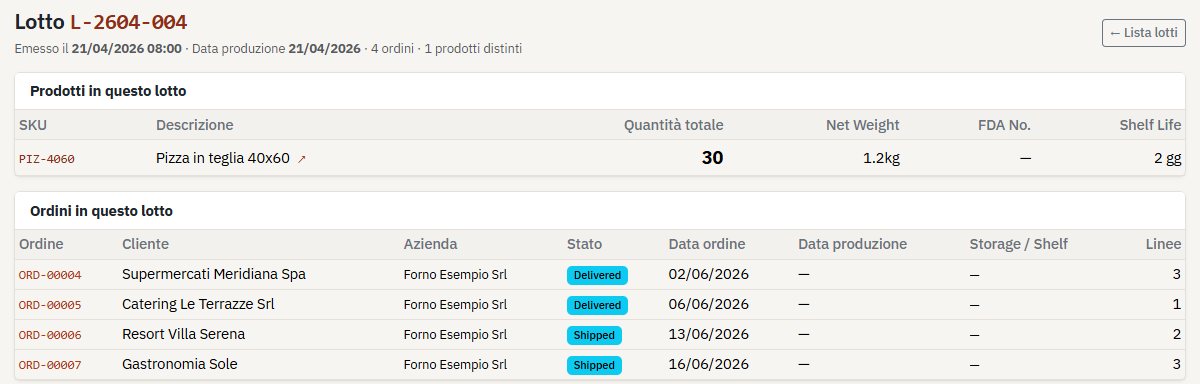
You cannot sell the oldest stock first if you cannot tell which stock is oldest. So the first step is simple: every batch you make or receive gets a batch number and a best before date, written on the boxes and kept in one record. The record also says how many units the batch had and where it is stored.
If you buy in ingredients or finished goods, do the same when they arrive. Write the supplier's batch and date on the delivery as you check it in. It takes a minute at the door, and it is much harder to do later, when the box has been opened and the paperwork is somewhere in the van.

2. Pack the batch that expires first
The rule that saves the most waste is often called first expired, first out. When you pack an order, you take from the batch with the nearest best before date, not from the batch that happens to be easiest to reach. For most small producers that is the same as the oldest batch, but not always: a batch of fresh sauce made yesterday may run out before a jar of chutney made in spring.
Make the right choice the easy one. Put the nearest dates at the front of the shelf, and label the shelf itself if it helps. Better still, when an order is prepared, let the system tell the packer which batch to take and write it on the order. Then the person packing does not have to think, and the delivery note shows exactly which batch went to which customer.
3. Look ahead once a week
A best before date is only a problem when you see it too late. Once a week, look at a list of batches sorted by date and check what will expire in the next month or two. Ten minutes is enough, and Monday morning is a good time, before the orders start.
Anything coming close is a decision you can still make calmly. Offer it to a regular customer at a better price, put it in a bundle, use it in a seasonal box, or move it to the market stall where people buy for this week. Many shops will not accept goods with less than a certain share of their life left, so ask your main stockists what their rule is and plan around it. Two months notice gives you choices. Two days notice gives you a bin.
4. Learn from what you throw away
When something does go to waste, write it down: which product, which batch, how many, and why. After a few months the pattern is usually clear. One flavour that you always make too much of. A batch size that suits the machine but not the orders. A shop that orders big in December and nothing in January.
That is the real value of keeping the dates. Not just catching the cases on the back shelf, but making less of what does not sell and more of what does. A notebook works if you are careful. As the number of products and batches grows, a stock list that keeps every batch with its date, suggests the right one for each order and shows what expires soon does most of the remembering for you.