
Picture a market stall on a Saturday morning. A parent picks up a jar of your pesto, turns it over and reads the label carefully, twice. Their child has a nut allergy. Whatever is printed there is what they'll trust, and they won't ask you a follow-up question.
That's why allergen information is the part of a label we'd take the most care over. The rules about exactly what to print and how vary from country to country, and they change from time to time, so this isn't legal advice. Check with your local food authority or a trading standards or food safety adviser for the rules where you sell. What we can share is a way of working that makes the labels you print match what is really in the product, every time.
1. Start from the recipe, not the label
The allergen line on a label is only as good as the recipe behind it. For each product, write down every ingredient, including the small ones: the stock cube in the soup, the flour used to dust the tray, the oil the nuts were roasted in. Then check each ingredient's own label or the spec sheet from your supplier for allergens. Sub-ingredients are where most mistakes hide. A spice mix can contain mustard, and a "plain" sausage can contain wheat.
Many countries publish an official list of allergens that must be declared. Find the one that applies to you and keep it printed on the wall where you work out new recipes. It's quicker than relying on memory, and a new member of staff can use it too.

2. Keep one master record for each product
Once you know what's in a product, store it in one place: the product name, the ingredients in the order you'll print them, and the allergens. Every label, every product page on your website and every spec sheet a shop asks you for should come from that record, rather than being typed again each time.
This matters most when something changes. A supplier swaps the brand of chocolate chips, you tweak a recipe for the winter, or you run out of one flour and use another for a week. If the allergen information lives in five different documents, one of them will be forgotten. If it lives in one record, you update it once, and the next labels you print are right.
We'd add a simple rule here: nobody changes a recipe without changing the record the same day. It feels fussy at first. It saves you from the worst kind of mistake.
3. Print labels that are easy to read
A label needs to be read by someone in a hurry, sometimes in poor light. Keep the ingredients list in a readable size, and make the allergens stand out in the way your local rules ask for. In many places that means highlighting them within the ingredients list, for example in bold. Avoid clever fonts and low contrast colours on the part people actually need to read.
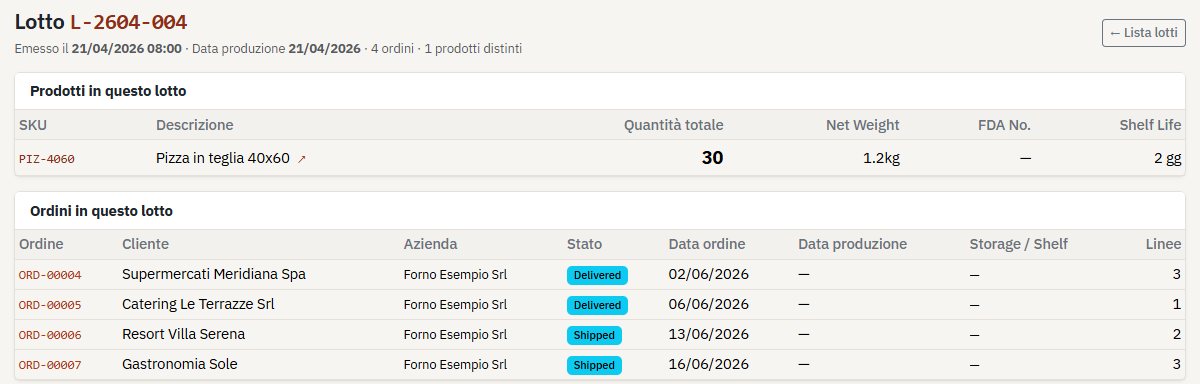
Put the batch number and the use-by or best before date on the same label, so one label tells you what the product is, what's in it and which batch it came from. Printing labels from your product records, with the batch filled in at packing time, beats handwriting them or editing a word processor file for each run. Fewer manual steps means fewer chances to print last month's ingredients on this month's jars.
If you sell to shops or cafes that put your products on their own shelves or menus, send them the same allergen information in writing, and send it again whenever it changes.
4. Cross-contact, staff and checking it all
Allergens can also end up in a product without being in the recipe, through shared equipment, surfaces or storage. How to handle that, and whether and how to use "may contain" style warnings, is something to discuss with your local food authority, since practice differs from place to place. What every kitchen can do is keep the allergen information visible where people work, clean between products in a sensible order, and store open allergen ingredients so they can't spill onto others.
Make sure everyone who packs, labels or sells your products knows where the allergen information is and what to say when a customer asks. "Let me check the label with you" is a much better answer than a guess.
Finally, build in a small check. Once a month, pick one product, compare the printed label against the recipe and the supplier labels of its ingredients, and fix anything that doesn't match. It takes a few minutes. And the next time someone at your stall reads the back of a jar twice, you'll know that what they're reading is true.