
There's a customer who ordered a box of your sourdough crackers every month for a year. Then, sometime in the summer, she stopped. No complaint, no message. You only notice in October, when you're looking at the order list for something else and realise you haven't seen her name in a while.
Most of the time nothing went wrong. People go on holiday, change jobs, forget, or buy something at the supermarket on a busy day and never quite get back into the habit. A small, well timed nudge is often all it takes. Finding new customers is hard work. Keeping the ones you already have is usually easier, and we think it deserves a bit of regular attention.
1. Know who your regular customers are
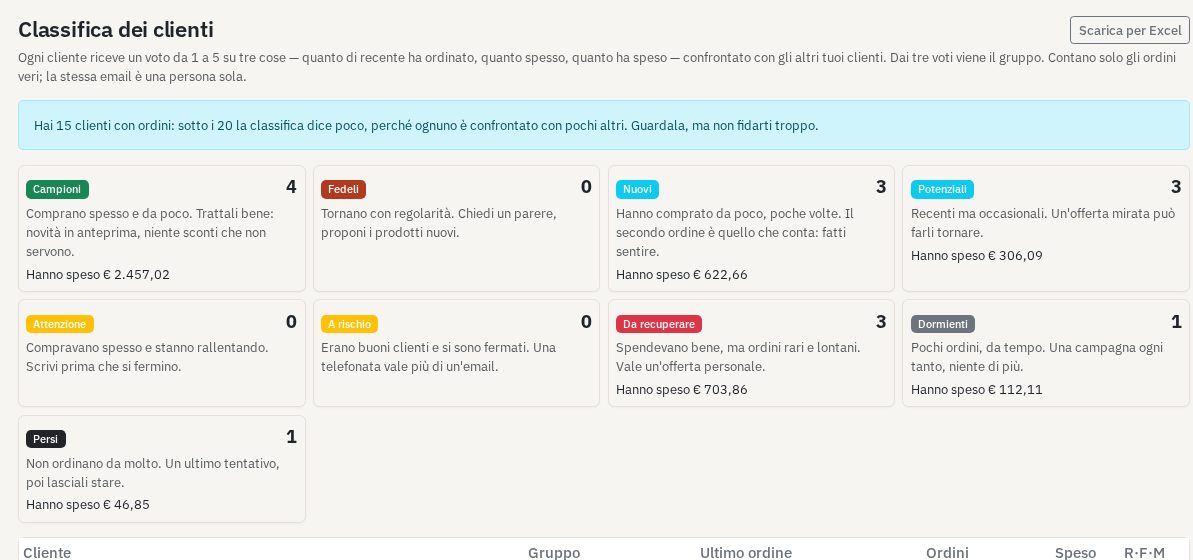
Start with a simple list. Go back through your orders for the last year and, for each customer, note how many times they ordered, when they last ordered and roughly how much they spend. You don't need a formula. After an hour with the list you will see three or four kinds of customer. Some order every few weeks without fail. Some come back at Christmas and in the summer. Some ordered once and that was it.
The first group are your regulars, and they're the ones to look after first. Write a few notes next to their names while you're at it. The cafe owner who always wants the large jars. The man who sends gifts to his sister. The woman who asked whether you could make the crackers without wheat. Notes like these are what make the next steps feel personal rather than automatic.

2. Notice who has gone quiet, by their own rhythm
A customer who orders every two weeks and hasn't ordered for six is a different story from one who orders twice a year. So look at each regular against their own habit, not against a single rule for everyone. If someone usually orders every month, two months of silence is worth noticing. If they order every season, wait for the season to pass.
Make it a fixed job. Once a month, maybe the first Monday, sit down with the list and pick out the regulars who are late compared to their usual rhythm. In a small business that will be a handful of names, rarely more. It's a quarter of an hour, and it stops the October surprise from happening.
3. Write a personal message, not a blast
For those few names, write to each person yourself. Keep it short and real. "Hi Anna, we haven't sent you crackers since June and wondered how you're doing. The new rosemary batch came out well, if you fancy trying it." Nothing more. No pressure, no countdown, no capital letters. If your note says she asked for a version without wheat and you now make one, tell her. That's the kind of detail people remember.
Some will reply and order. Some will tell you why they stopped, and that is worth knowing too. Maybe the postage went up, maybe the last parcel arrived late, maybe they moved. A few won't answer at all. Don't chase them with a second and third message in the same week. One kind note is a reminder. Three are a nuisance.
4. A simple seasonal email to a group, and respect for who said no
Besides the personal notes, it helps to write to your customers as a group a few times a year, when there's a real reason. The first marmalade of the winter, the Christmas boxes, the summer range, a new product. Pick the group the message is for. Customers who bought gift boxes last December are the right people for the Christmas email. People who only ever buy one product might want to hear when it's back in stock and not much else.
Keep the email plain: what's new, when it's available, how to order, and maybe a line about what's happening in the kitchen this month. Four or five emails a year that people actually open are worth more than a weekly newsletter they learn to ignore.
And only write to people who agreed to hear from you. Keep a clear note of who said yes to emails and who didn't, and make it easy to say no later. A link at the bottom of every email to stop receiving them, and when someone uses it, they come off the list straight away. It's the law in many places, and it's also basic good manners. People who chose to stay are the ones who want to hear from you.
Put together, the routine is small: a list of regulars with a few notes, a monthly look at who has gone quiet, a personal message to each of them, and a handful of seasonal emails to the right group. When the list gets long, software that keeps orders, customer groups and email preferences together can do the sorting for you, so the monthly check takes minutes and the personal part stays personal.