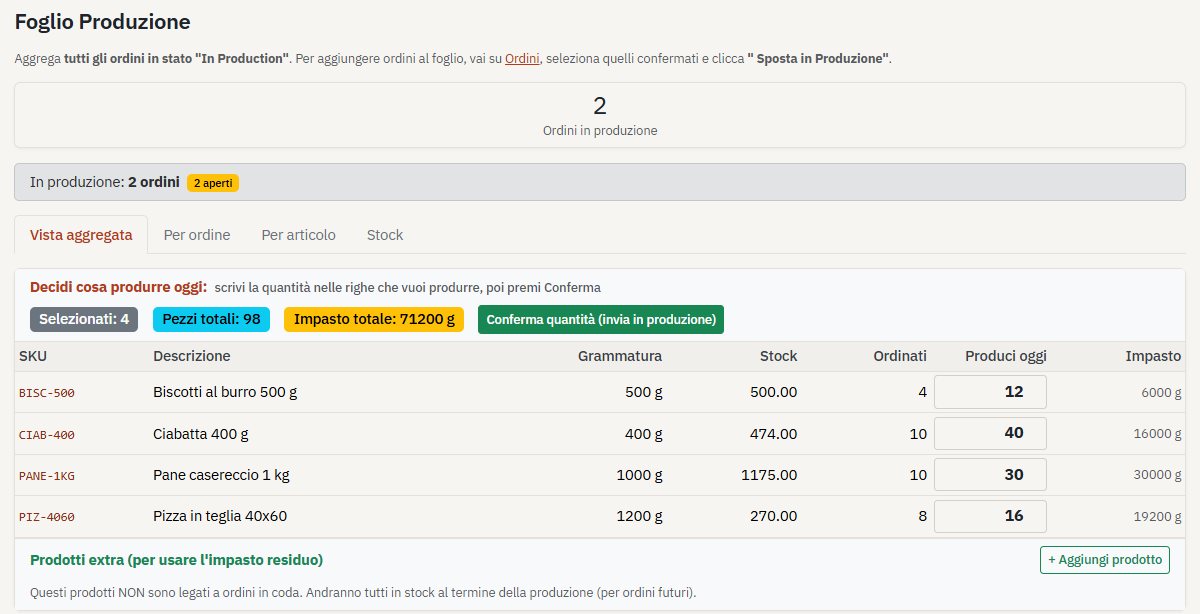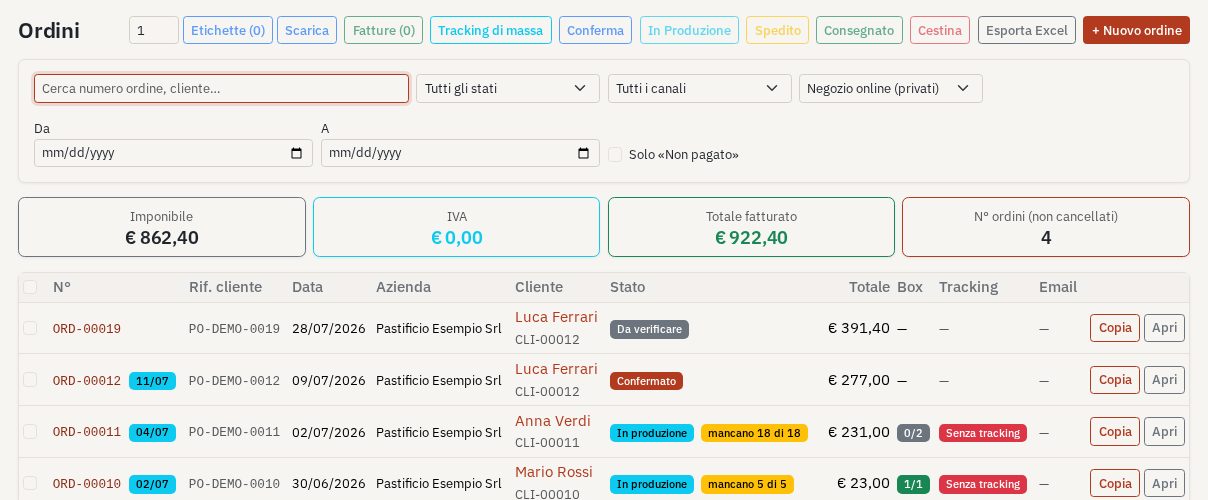

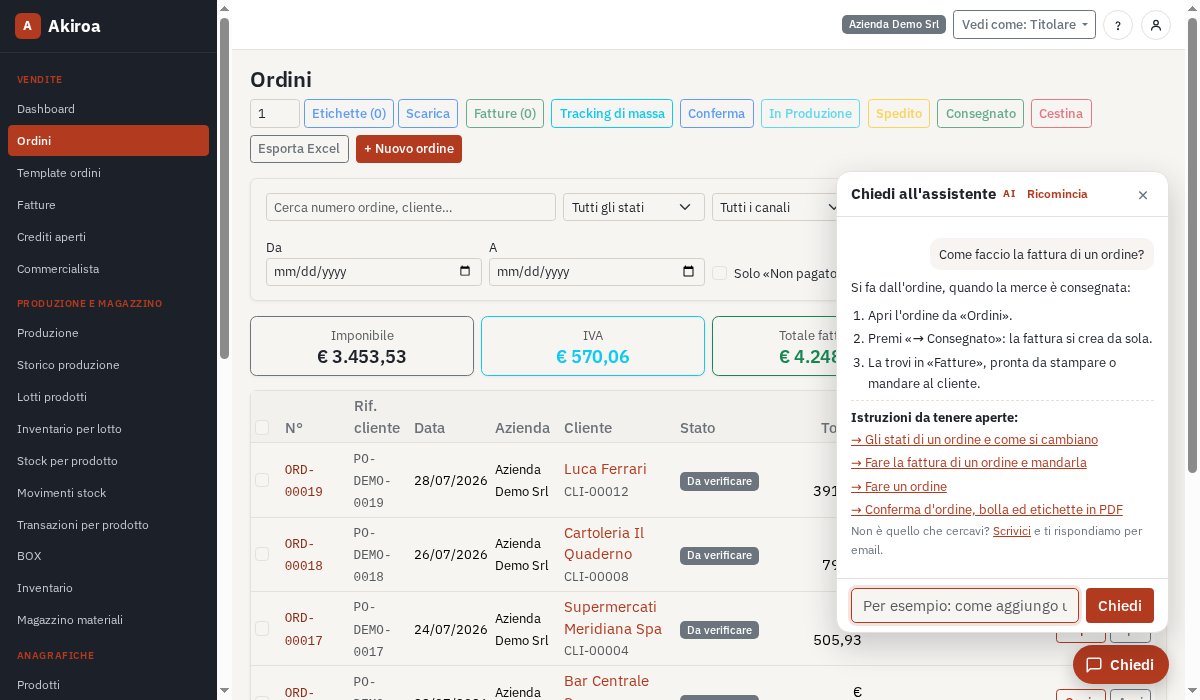
The first cafe that stocks your granola feels like a big moment. The fifth one feels like a lot of email. One orders by replying to a three week old thread, another sends a photo of a handwritten list, the deli owner leaves a voicemail at seven in the morning, and the farm shop just texts "usual x2, can you do Friday?"
Wholesale customers are often the steadiest income a small producer has. They're also the ones most likely to slip through the cracks, because each of them orders in their own way and none of them reads your order form. We don't think the answer is forcing them to change. It's having a routine on your side that can take whatever they send.
1. Know each customer's usual order and terms
Most trade customers order roughly the same thing every week or every fortnight. Write that down for each of them: the products and usual quantities, the delivery day, the price they pay, and how they settle up. Some pay on the spot, some at the end of the month, some 30 days after the invoice. It sounds obvious, but in many small businesses this lives only in the owner's head, and it goes on holiday when they do.
Keep a separate wholesale price list from your retail one, and record which customers are on which. When someone new asks for trade prices you then have a clear answer, and you won't accidentally invoice a cafe at shop prices, or a home customer at trade ones.

2. Turn every message into an order the same day
The emails, texts and voicemails will keep coming in all shapes. What matters is that each one becomes a proper order quickly, ideally the same day. Choose a fixed moment for it. Some producers do it first thing with a coffee, others at the end of the day once the kitchen is clean.
Make the copying part as short as possible. When a customer says "same as last week", you should be able to repeat their previous order and change one line, not type it all again. For long emails or photographed lists, a tool that reads the message and drafts the order lines for you can save a lot of squinting, as long as you check the draft before saving it. And reply to confirm. A two line "got it, 12 jars of the blackberry and 6 of the plum for Friday" catches most misunderstandings before they reach the van.
3. Cut-off times, delivery rounds and standing orders
A cut-off time does more for your week than almost anything else. "Orders by Tuesday at noon for Thursday delivery" gives you a clear production plan and gives customers a rule they can remember. Expect people to miss it now and then. Decide in advance whether you squeeze late orders in or move them to the next round, and be consistent, or the exceptions become the norm.
Group customers by delivery day and area, so the same round covers the same streets each week. For the steadiest accounts, suggest a standing order: the same products every week unless they tell you otherwise. They like not having to remember, and you get a baseline you can plan production around.
4. Delivery notes, invoices and getting paid
Every wholesale delivery should go out with a delivery note that matches the order, and the invoice should come from the same order with the same quantities and prices. When the paperwork is typed separately at the end of the month, small mismatches creep in, and then you spend a morning on the phone working out whether they had 10 or 12 boxes.
Keep an eye on who owes what. With payment terms of 30 days, it's easy to realise in March that a cafe hasn't paid since January. A short weekly look at overdue invoices, and a friendly reminder when needed, keeps it from building up.
None of this needs a big system on day one. A clear list of customers and their usual orders, one place where every order ends up, and a fixed time each day to deal with messages will already take most of the chaos out of it. When the number of trade customers grows, that's the point to move it all into software that keeps orders, stock, delivery notes and invoices together, so the Friday text about "the usual" takes you a minute instead of a search through three apps.